Solar. What you need to know before getting quotes
Before you talk to a salesperson or request quotes, make sure you understand these basics:
-
A solar system is only as good as the design and installation
-
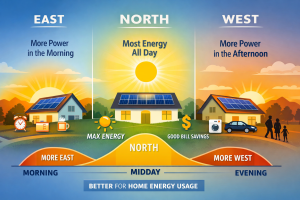
North is best for total output, east and west can still be excellent for bill savings
-
Your savings come mostly from using solar during the day, not exporting it
-
Bigger is usually better, within reason. Most people regret going too small
-
Rebates reduce the upfront price, but they decline over time
-
Batteries are great for independence, but not always the best financial move yet
-
If you own an EV or plan to, solar sizing should be planned around that now
If you want to explore system types straight away, you can jump to:
Or see the core components of any solar system:
1. The four core components of a solar power system
A properly built home solar system has four main parts:
-
Solar panels
-
Solar inverter
-
Mounting and racking
-
Monitoring and consumption tracking
Component 1. Solar panels
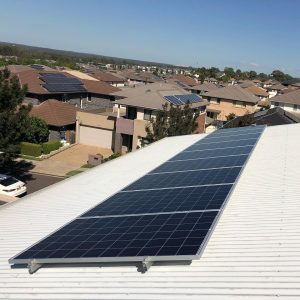
Solar panels sit on your roof and convert sunlight into DC electricity. In 2026, most panels you’ll see quoted are modern monocrystalline panels, often with half-cut cells. The exact cell format matters less than people think. What matters is quality control, warranty support, and real-world reliability.
If you want a safe default choice, stick to a panel brand with strong Australian support and a long track record. On our installs, we commonly use JA Solar because it offers a strong balance of performance, warranty backing, and value. You can read more on our JA panel option here.
Component 2. Solar inverter
The inverter converts the DC electricity from your panels into AC electricity your home can use. It is the hardest-working component. It is also the component most likely to fail first, usually somewhere in the 10 to 15 year window.
There are three common approaches:
-
String inverter. One main inverter on the wall
-
Microinverters. One small inverter behind each panel
-
DC optimised systems. A hybrid approach that uses optimisers with a central inverter
Microinverters and optimised systems can be helpful on awkward roofs, mixed orientations, or where monitoring each panel matters. A well-designed string system is still an excellent option on many homes.
If you’re curious about premium optimisation, see our SolarEdge DC optimised inverter page. It’s a great option when you want panel-level performance and long warranty protection.
Component 3. Mounting and racking
Racking is what holds the panels onto your roof. Most racking systems are aluminium and do the job well when installed correctly. The key is corrosion resistance, roof sealing, wind ratings, and installer discipline. Bad racking work is one of the fastest ways to turn a system into a long-term headache.
Component 4. Monitoring and consumption tracking
Most systems will show you production by default. That’s only half the story. If you want to actually optimise savings, you want to see how much power your home is using and when. That’s where consumption monitoring comes in.
The goal is simple. Use more solar during the day, export less when exports are paid poorly.
2. Why installation quality is critical
A great system with poor workmanship can underperform, look messy, and become unsafe. Solar is not just panels on a roof. It’s high voltage electrical work, roof penetrations, weatherproofing, cable management, isolator placement, switchboard compliance, and commissioning.
A good installer will:
-
Design for your roof, not for their own convenience
-
Use safe cable routing and tidy terminations
-
Avoid putting inverters in harsh sun or hot, unventilated spots
-
Provide proper commissioning, testing, and handover
-
Stand behind workmanship and respond when support is needed
At ND Solar Group, we install with in-house electricians only. No subcontractors. That keeps quality consistent and accountability clear across Sydney.
To see how we handle installs end-to-end, visit our solar installations page.
3. Roof direction and angle. What really matters in Sydney
Direction
-
North-facing panels generally generate the most energy over the year
-
East panels generate more in the morning
-
West panels generate more in the afternoon and early evening
-
East and west often produce slightly less total energy than north, but can improve bill savings because they align better with home usage before and after work
If you’re in a typical household, east-west layouts can be a smart move. They can increase self-consumption, which is usually where the money is.
Angle
Roof pitch is usually fine as-is. You do not need “perfect” tilt to get great results. Flat roofs can work too, but they often require extra design attention for drainage, spacing, and maintenance.
The real takeaway. Don’t let a non-perfect roof stop you. Good design makes a bigger difference than chasing a theoretical ideal.
4. How your home uses solar energy
Your home is always doing one of two things:
Mode 1. You are generating more than you need
Your home uses what it can, and the rest exports to the grid. Export payments vary, and they are usually much lower than what you pay to import electricity.
Mode 2. You are using more than you are generating
The grid tops up the difference. You pay for the imported electricity.
This is why self-consumption matters. Every kilowatt-hour you use during the day is usually worth far more than exporting it.
Practical ways to improve self-consumption:
-
Run dishwasher and washing machine during daylight
-
Shift pool pump to mid-day
-
Pre-cool or pre-heat your home while the sun is out
-
Charge an EV during the day if possible
-
Consider a battery if your usage is heavily night-based
5. What size system should you buy
A simple rule that holds up surprisingly well. Install as much solar as you can reasonably fit and afford, within network limits and sensible design.
Why people regret going small:
-
Winter output is lower than people expect
-
Households often grow in energy use over time
-
EVs, heat pumps, induction cooking, and home offices increase demand
-
Adding panels later can be expensive and awkward
If you want quick reference points, check these common system sizes:
If you’re not sure, start with the question. What does your home use per day, and how much of it happens during the day. Then design around that, with an eye on future electrification.
6. Rebates in 2026. Still worth it
In Sydney, the main solar rebate mechanism reduces the upfront cost at the point of sale. In plain English, your price is discounted because certificates are created and traded behind the scenes.
Two key things to know:
-
Most advertised prices already include the rebate
-
The rebate value generally reduces over time, so earlier installs usually get a better outcome
If you want a transparent estimate, use our rebate calculator page to understand how certificates change by location and year.
7. What a quality solar system should cost in 2026
Prices vary based on roof complexity, switchboard condition, equipment tier, and installer quality. The biggest pricing trap is comparing cheap systems to good systems as if they are the same product.
Things that can push price up for good reasons:
-
Switchboard upgrade or compliance work
-
Premium inverter choice or DC optimisation
-
Microinverters
-
Tile roof complexity, steep pitch, or difficult access
-
Higher-quality mounting and better finishing
-
Consumption monitoring
Things that push price down for bad reasons:
-
Rushed labour
-
Corner cutting on safety or compliance
-
Cheap components with weak support
-
Subcontracting with inconsistent workmanship
-
Poor design that underperforms
If you want pricing tied to real design, the right next step is a site-specific quote. We can provide you with a quote before you pay a cent. Just reach out to us via our contact form.
8. How to estimate savings and payback
Payback depends on:
-
Your system size and output
-
Your self-consumption ratio
-
Your electricity tariff
-
Your export tariff
-
Whether you have time-of-use pricing
-
Whether you charge an EV
A rough way to think about it:
-
Daytime self-used solar saves you roughly what you pay per kWh
-
Exported solar earns you roughly your feed-in rate
-
Self-consumption is usually worth far more than exports
If anyone shows you savings based on 100 percent self-consumption, treat that as a red flag. Ask for scenarios. For example 25 percent, 50 percent, and best case.
9. Batteries. When they make sense
Batteries are about three things:
-
More self-consumption
-
More independence from tariffs and export changes
-
Backup power during outages, if designed that way
Batteries can reduce grid reliance dramatically when sized correctly. They can also protect you from lower feed-in tariffs and price volatility.
Two important notes:
-
Not every battery system provides backup during a blackout. It must be designed and wired for it
-
Batteries make the most financial sense when your household uses a lot at night, or you’re on tariffs where night power is expensive
If you’re considering storage, start here.
10. EV charging changes everything
If you plan to drive electric, solar is one of the best “fuel” upgrades you can make. The best outcome is usually:
-
Size solar for household plus EV
-
Install a smart charger that can prioritise solar
-
Consider battery storage if most charging must happen at night
If you want a charger that works properly with your solar setup, visit here.
11. The next step
If you want solar that performs well, looks clean, and lasts, your next step is to get a design-led quote, not a cookie-cutter package.
Here’s the simplest path:
-
Decide whether you want residential or commercial
-
Pick a sensible system size baseline
-
Understand your components
-
Get a tailored quote that matches your roof and usage
If you’d like, tell us your average daily usage and whether you have an EV. We’ll suggest a sensible size range and a simple layout strategy to get you started.